Building School-Ready Skills at Home
The move from home to school marks an important stage in every child’s development. While teachers provide structured learning environments, parents play an important role in building school-ready skills at home. From organising school supplies to establishing helpful routines, the preparation that happens before children enter the classroom can greatly impact their educational journey.
Many parents wonder which basic abilities they should focus on building before their children start school. Beyond academic basics like counting or letter recognition, there are practical skills that help children adapt confidently to classroom settings. These first abilities help the move go more smoothly and also support ongoing educational success throughout the primary years.
With the right approach, everyday activities at home can become meaningful learning opportunities that prepare children for school life. Simple household routines, thoughtful conversations, and playful interactions all help children grow the independence and social awareness that classroom environments require.
Essential Skills: Self-care and Independence
Research from the Department for Education shows key developmental milestones expected at school entry. Children need self-care abilities like putting on their own coat, using the toilet independently, and washing hands properly to make the transition easier.
Having access to quality affordable school & classroom supplies at home gives children a chance to practise these self-care routines. They can manage their belongings in a comfortable environment. This practice builds responsibility and confidence for school.
Learning to share toys, take turns during games, and express feelings appropriately helps children join group settings with greater confidence. These social basics make it easier for children to adjust to classroom life.
Listening skills form another important area for school readiness. Children who can follow simple instructions at home will find it easier to participate in classroom activities. Parents can encourage this skill through games like “Simon Says” or by giving two-step directions during daily routines.
Setting up self-care routines at home builds confident learners in the classroom. Parents can introduce morning routines that mirror school expectations, such as getting dressed, brushing teeth, and preparing belongings. Creating a visual chart with pictures of each step helps children remember the sequence.
Age-appropriate responsibilities also encourage independence. Young children can help set the table, put away toys, or sort socks. These simple tasks help children gain confidence and show they can manage things on their own.
Literacy Foundations: Creating a Language-Rich Environment
Statistics show that early literacy exposure strongly affects school readiness. Daily reading routines develop vocabulary and comprehension skills that help children get ready for classroom learning. Just 15 minutes of reading together each day introduces children to thousands of new words yearly.
Letter recognition games using household items make learning fun and memorable. Children can find letters on food packaging, sort magnetic letters, or trace letters in sand or salt. These playful activities develop important pre-reading skills.
Storytelling techniques help children develop narrative ability. Encouraging children to retell familiar stories or create their own tales helps them grasp story structure. This kind of practice helps support reading comprehension when formal education begins.
Parents can introduce a broad range of vocabulary during everyday moments without making it feel like a lesson. During bath time, introduce words like “floating,” “sinking,” or “bubbly.” While cooking, talk about ingredients being “diced,” “whisked,” or “simmering.”
Everyday conversations help children develop language skills when parents take time to truly listen and respond. Car journeys, mealtimes, and bedtime routines offer excellent opportunities for meaningful talks.
Using daily routines and playtime provides natural ways for children to develop language. Asking children to describe what they see during a walk or encouraging them to talk about their drawings introduces new words.
Numeracy Skills: Maths in the Kitchen
Research shows early numeracy abilities can predict later academic success. When children use numbers, shapes, and measurements in daily situations, they develop logical thinking. These skills help them reason about quantity and size.
Counting stairs on the way to bed builds one-to-one correspondence and helps children understand order. Sorting laundry into piles of matching colours provides a purposeful way to teach colour and category concepts.
For shape and pattern recognition, arranging different shaped pasta into a repeating pattern on the kitchen table works well. Using wooden blocks to build a wall with alternating shapes provides opportunities for children to identify circles, rectangles, and triangles.
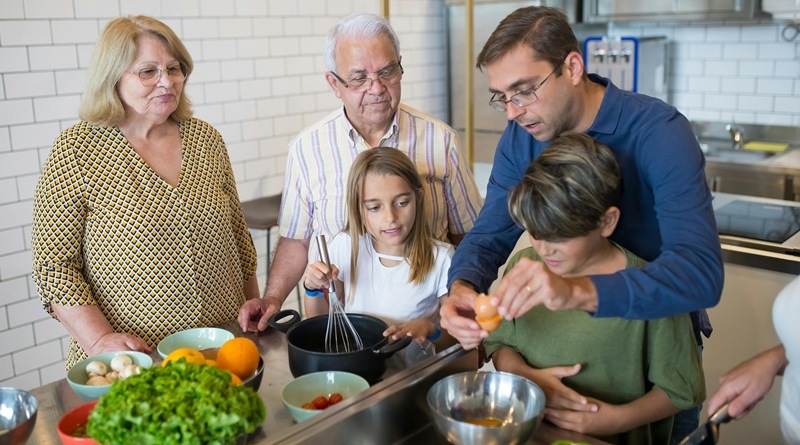
Cooking and baking are great ways to introduce measurement concepts. Even young children can help measure ingredients, count egg shells, or discuss ideas like “more” and “less.” These hands-on experiences make abstract mathematical ideas real.
The kitchen is an excellent place for supporting maths skills through hands-on experience. Everyday cooking tasks introduce numbers, counting, measurement, and sequencing in situations children encounter at home.
Allowing children to count spoonfuls of flour for a cake, measure water in cups, or check how many eggs are needed helps them understand quantities. These regular kitchen tasks make numbers tangible and show how addition and subtraction happen during daily routines.
Social and Emotional Readiness: Classroom challenges
UK research shows children who develop the ability to manage emotions adjust more easily in school settings. Children who handle feelings constructively find it easier to deal with classroom challenges and interact well with peers.
Turn-taking games like board games, simple card games, or even taking turns on a swing help children learn about classroom participation. These activities teach patience and the idea that everyone gets a fair chance.
Helping children cope with frustration allows them to continue through challenging learning tasks. Parents can gradually increase the difficulty of activities at home, offering support but encouraging children to work through struggles.
Simple puzzles that become a bit harder or building projects that require several tries help develop this persistence. Role-playing activities get children ready for social interactions at school.
Everyday moments – whether in the kitchen, at play, or during routines – offer parents countless chances to build school-ready skills. With encouragement and practice, children gain the tools they need to succeed not just on their first day, but throughout their school journey.