
From Cozy to Creepy: Discovering Your Child’s Halloween Style
My older daughter has never liked scary stories. Or sad ones, for that matter. Bambi was too much for her… way too much. We had to stop the movie not long after it started, right after the part where the mother dies. She wouldn’t touch a deer-themed anything for years. Even “mild peril” was an emotional landmine.
Her younger sister, on the other hand, demanded a Frankenstein costume for her Halloween party at age five. Reassuringly, the idea came from someone else, but she latched onto it with the devotion of a tiny horror fan. Her big brother had been reading an abridged version of Frankenstein at the time (horror elements still there, language modified for teenagers of the 21st century), and she decided it was her turn to join the monster ranks.
My son, aka big brother, is the Halloween middle ground. He can be startled in a haunted house but bounce back quickly. He likes gory costumes but also enjoys a soft, squishy Shrek outfit because he thinks the ears are funny. He likes a bit of adventure, sure, but also loves the cosy rituals of carving pumpkins and drinking hot chocolate afterward.
During the spooky season, that is upon us now, he isn’t the challenge. His sisters are.
If Halloween has taught me anything as a parent, it’s this: kids don’t all approach fear the same way. Some crave it. Some reject it outright. Some enjoy it, but only on their own terms.
There’s no one-size-fits-all costume, activity, or Halloween playlist. The trick is figuring out what is your child’s fear style and what kind of “scary” (if any) your child actually enjoys.
Experts agree that fictional fear, like monsters, eerie costumes, or suspenseful stories, can help kids build emotional resilience. But only if the experience feels safe and voluntary.
“Children want to confront fear in a controlled way, it’s part of learning how to manage big emotions,” says sociologist Dr. Margee Kerr. “But not all kids enjoy that process equally – and that’s okay.”
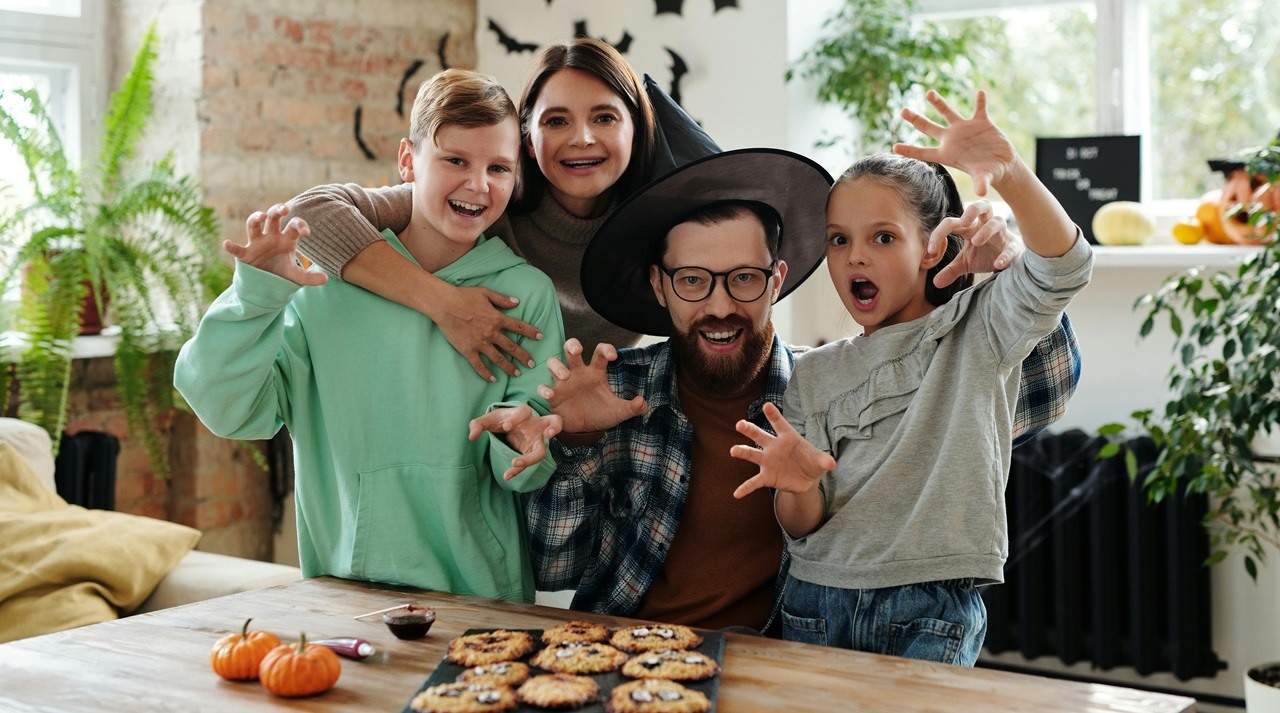
In our family, Halloween evolves into three very different celebrations. Here’s my guide to the parents of little monsters of all types.
Sensitive & Sweet
Not every child enjoys being spooked. Loud noises, eerie costumes, or even the dark can feel overwhelming, especially for younger kids or those who are naturally sensitive. But Halloween can still be magical without the monsters.
Things to try:
- Dress up as friendly characters—unicorns, bumblebees, or favourite storybook heroes.
- Create a cosy movie night with Room on the Broom or It’s the Great Pumpkin, Charlie Brown.
- Host a daytime trick-or-treat walk in a quieter neighbourhood.
- Read not-so-scary books that celebrate the season (without the screams).
- Let them decorate cookies or paint pumpkins instead of carving.
“When kids lead the activity, they feel safer. Let them choose when to engage or take a break,” says parenting psychologist Dr. Laura Markham.
Bold and Boisterous
Does your child run toward the skeleton with flashing eyes? Are they the first to sign up for the haunted maze? Boisterous kids often love fictional fear – it’s exciting, empowering, and just the right kind of adrenaline.
“Fictional fear is a tool. It lets kids test boundaries and build resilience, all while knowing they’re safe,” explains Dr. Margee Kerr.
Things to try:
- Visit a kid-friendly haunted house or “spooky walk” (avoid gore-heavy scenes).
- Encourage bold costume choices like zombies, mummies, or werewolves, then help them invent a backstory.
- Hold a sleepover with a scary-story contest and using flash-lights.
- Set up a “mad science lab” with slime, goo, and bubbling potions.
- Read suspenseful but age-appropriate books like Goosebumps or Coraline.
“Children enjoy the pretend element of fear,” says Dr. Markham. “It helps them build coping skills—without the stakes of real fear.”
Somewhere In Between? That’s Fine Too
Most kids fall somewhere between the extremes. They might like spooky stories, but only if they’re not alone. Or they might go trick-or-treating in a scary costume, but skip the haunted house.
The key? Follow their cues. Let them explore both the silly and the spooky, and check in often to see how they’re feeling.
Beneath the costumes, candy, and chaos, Halloween is quietly teaching kids some pretty big life skills.
First, there’s bravery and boundaries. Choosing how scary is too scary helps kids build confidence. When they get to say, “I’ll go through the haunted house, but only with Mom,” they’re learning to push their limits in a way that still feels safe.
Then there’s imagination. From inventing costumes to telling spooky stories, Halloween gives children full creative license. They get to step into other identities, explore new emotions, and play in a world that feels different from everyday life.
Emotional regulation is another hidden lesson. Feeling scared, then safe again is powerful. Whether it’s jumping at a skeleton decoration or getting startled by a sibling in a mask, that rush-recover-repeat cycle helps kids practice managing their reactions.
And finally, there’s social bonding. Shared laughter after a mild scare, trading candy on the living room floor, or walking the trick-or-treat circuit with friends – it all helps build connection.
No matter what kind of Halloween kid you’ve got, the season offers something meaningful beneath all the sugar and slime.