
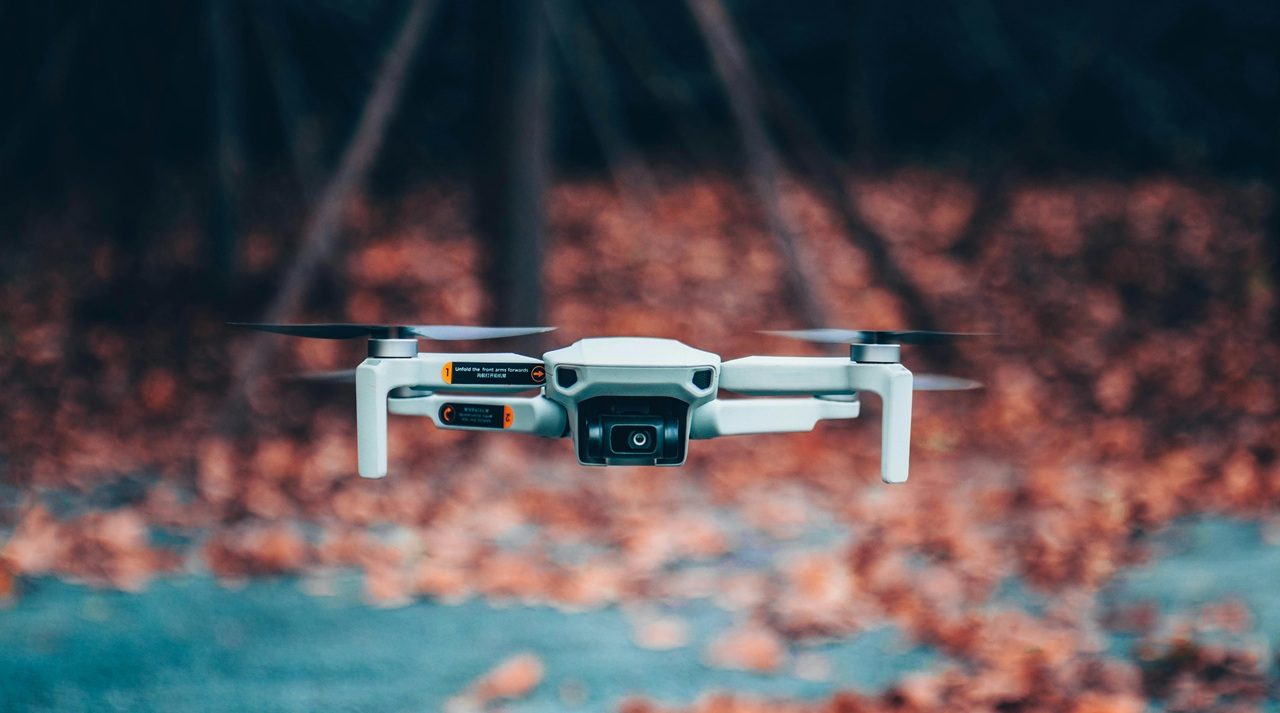
Flying high with DJI Neo the family-friendly drone
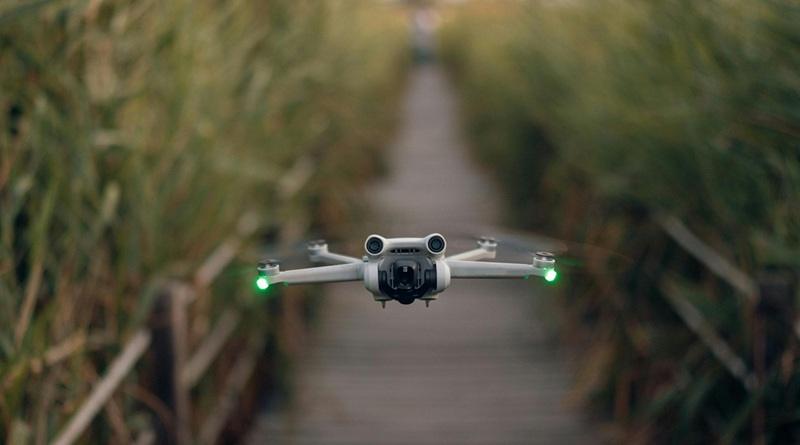
Thinking about buying your child a drone? Compact autonomous models like the popular DJI Neo — which can take off and land in the palm of your hand — are increasingly tempting. But in 2026, even tiny drones like this require a Flyer ID to be flown legally. So is it still worth getting a drone?
Here’s our experience:
“Can it be my pet?” ten-year-old Ella asks after being chased around a local beauty spot by our DJI Neo drone.
“Sure,” I tell her, “you can put some stickers on it too if you want.”
“Him,” she tells me.
“Eh?”
“It’s he. Neo is a boy.”
“Fair enough, you can put some stickers on him.”
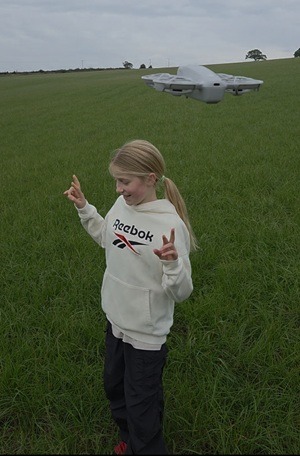 Ella and her friend spend the next twenty minutes running through the fields with Neo in hot pursuit – thanks to his impressively accurate “follow me” mode. They particularly enjoy stopping abruptly and laughing together at how funny Neo looks as he slams on his brakes.
When we reach a wooded area, we stop and Ella holds out her hand, palm up. Neo obediently flies into her palm and his blades – which are completely covered by guards – stop whirring as he lands in it. She turns to me and smiles and tells me “I love him”.
I’m pretty enamoured with Neo myself to be honest. We’ve had a couple of drones in the past and Ella’s brother, Harrison, also has a RC airplane. But our previous drones turned out to be huge disappointments, from the first toy drone we had – which blew away on the maiden flight and was never seen again – to the first adult drone I had, that was so difficult to fly that it’s spent the last six years in my loft. I’d basically given up on drones. They were either cheap toys, or too expensive to justify me purchasing one. Then, last year, I read about the DJI Neo, which markets itself as an autonomous selfie drone, as well as being a pretty capable drone in its own right.
We have to turn Neo off for a few minutes as we walk through a wooded area, because unlike DJI’s more expensive drones there is no collision detection on the Neo. Not that a collision would do much damage, because Neo is light, sturdy and the moving parts are well protected, but I don’t really want to have to climb into any bushes to retrieve it.
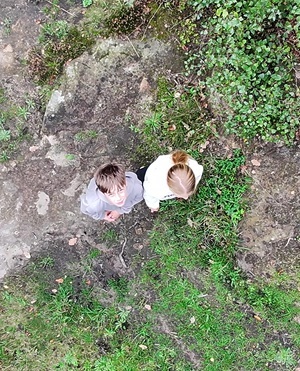
We press the launch button on my phone and the whirring of the blades kick in. Neo rises slowly and then ascends above us on almost a direct vertical path. I can see him adjusting to compensate for the wind as he does so, and I’m amazed at how accurate the tracking system is. A few moments later Neo is landing into Ella’s palm and she’s grinning from ear to ear and telling Neo that she loves him.

I don’t want to risk Circle Mode, as there’s not enough clear area around us for Neo to fly around us in a circle, with Ella and Jasper at the radius, so we opt for Spotlight Mode instead, that sees the Neo stay in one spot but turn to face Ella wherever she runs with Jasper.
A few days later I take Neo out with 13-year-old Harrison, who hasn’t seen what Neo is capable of yet. I know he’ll love the autonomous functions as much as Ella and myself, but I’m keen for him to try flying the Neo manually. He loves aviation and when he’s not flying his radio-controlled airplane he’s exploring the world on Microsoft Flight Simulator with his friends. Ella has told him a little bit about Neo, but he doesn’t know that there’s a manual mode yet. We spend a few minutes with Neo chasing Harrison around in Follow Mode, then I show Harrison the DJI app on my phone and he immediately notices the virtual control sticks. Taking the phone from me he familiarises himself with the controls, and less than a minute later seems to have the hang of making the Neo climb, descend, move forward, backward and to the sides. It’s incredibly intuitive for him and so accurate to control that he’s able to fly through our legs when we both stand with them wide open.
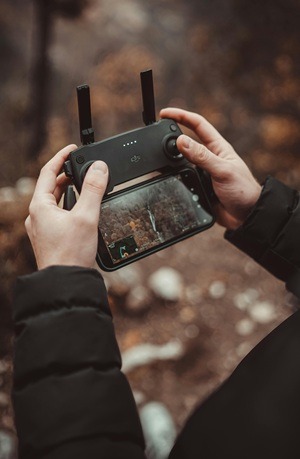
“Use the home button,” I tell Harrison.
“What’s that?” he asks. So, I tell him about the function that returns the DJI Neo to the exact spot that it started its flight from. We press the button, and a minute or so later Neo is whirring toward us and settling down in the spot that it launched from. “Wow,” Harrison says.
We came to the field on our bikes, so an idea strikes me, and I tell Harrison to go for a quick cycle to our house and back while I hide Neo on the field that we’re in.
“Why?” he asks.
“You’ll see.”
Ten minutes later and he’s back. I hand him my phone, and we open the “find my drone” function on the DJI app. The field is several acres in size, with a wooded area, that I left the drone in. Without any indication from me about where the Neo is, Harrison is able to walk directly to it, using the app and the only thing that slows him in the process is the distance.
We’ve all been thrilled with our DJI Neo and in my opinion it’s the perfect drone for all the family. Ella loves the autonomous functions, because to her it’s like having the most obedient pet ever. Harrison loves flying Neo around manually and has been looking at a pair of First Person View (FPV) goggles that can connect wirelessly to the Neo and give a truly immersive first-person view of the flight. As for me, as a travel writer, I can honestly say that it’s the gadget that I’ve been missing all my life. The DJI Neo is small enough to fit in my coat pocket, it charges from our mobile phone charger and can be controlled with my phone or used autonomously, so I’m looking forward to taking it with us on our adventures.
Flying Legally in 2026: What You Need to Know
Since the DJI Neo has a camera, I was technically obliged to licence myself as an Operator. There was no test required for this, but I do have to display my Operator ID on any drones that I own, including the Neo. This might sound like a lot of red tape, but all it essentially means is paying £11.79 per year to maintain my Operator ID, and having a small label with my ID on the inside compartment of any drones I own.
As the rules on drones under 250g are changing in 2026 we’ve also all taken our Flyer ID test in preparation for this. Again, this probably sounds more intense than it is. In practice it’s a very straightforward process, that has no cost and involves a 40-question multiple choice test. The pass mark is 30 out of 40 and the test can be taken as many times as you like. All the information needed to pass the test is in the Drone Code, which is available to read on the Civil Aviation Authority’s website. I think of myself as a sensible person and backed myself to pass the test on common sense alone. Many of the questions had obvious answers about not flying near military bases, airfields or over crowds, but some did require specific knowledge about maximum heights to fly at (120m), distances from residential areas (150m) or individual residential buildings (50m). I scored 34 out of 40 and all the questions I got wrong were where I had erred on the side of caution and was being overly cautious, rather than unsafe.
13-year-old Harrison read the Drone Code first, and referred to it through the test, which is allowed. He scored 38 and was very pleased to have beaten his dad. It took him around an hour, to complete, compared to my 20 minutes of “winging it”. I would like to add that I did later read the Drone Code, so that I could complete the test with 10-year-old Ella. Children under the age of 13 take the test with a parent, and with some gentle nudging from me, as well her referring to the Drone Code, she scored 37.
So, we’re all the proud owners of our Flyer IDs now, which we were able to immediately print off after passing the test, and looking forward to lots of safe, legal adventures with Neo in 2026.