
King’s Infant & Junior Division recognised as a Harmony School
In July, King’s Infant & Junior Division was formally recognised as a Harmony School, marking an exciting milestone in the development of its ‘Enquiry Curriculum’.
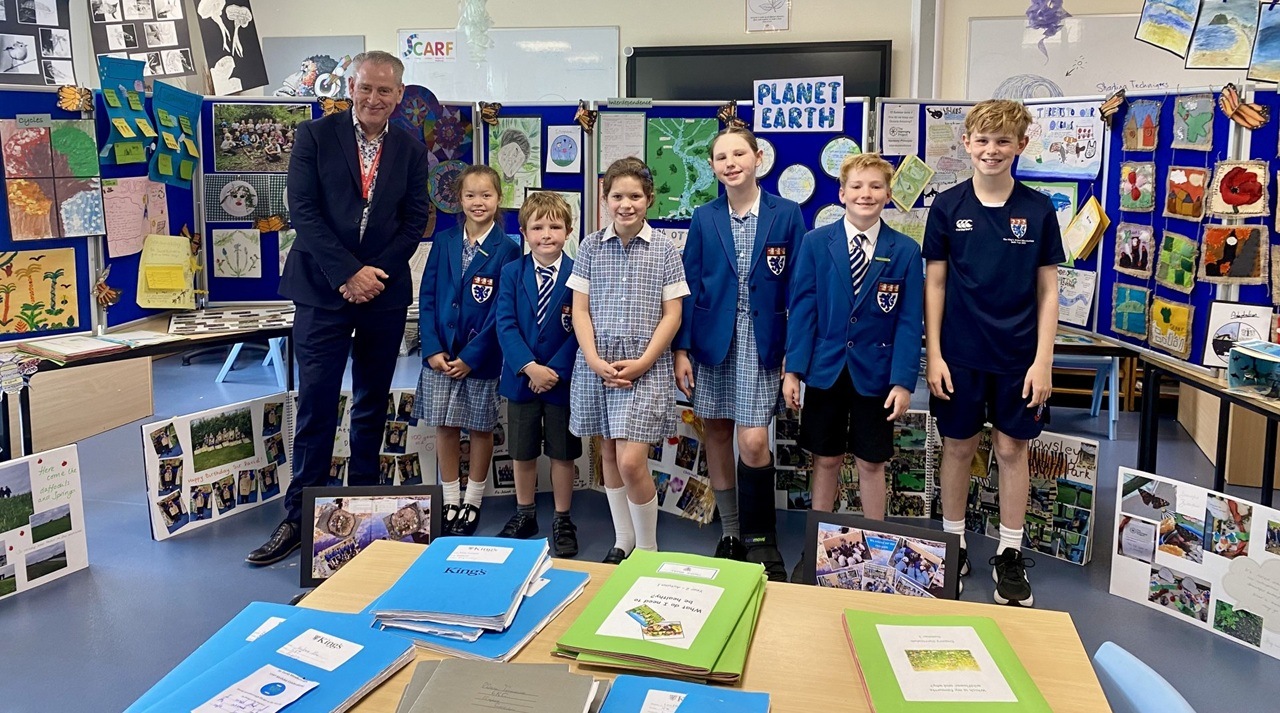
Richard Dunne, CEO of The Harmony Project, visited King’s to officially present staff and pupils with the Harmony Accreditation Award, while seeing pupils’ work and learning more about how the Harmony Principles are being implemented across the school.
Over the past year, staff have developed an Enquiry Curriculum rooted in the Harmony Principles of oneness, diversity, adaptation, health, cycles and interdependence. The approach encourages pupils to ask questions, make connections across subjects and explore the world around them through meaningful learning experiences.
From Early Years through to Year 6, pupils have taken part in opportunities to investigate, collaborate, create and reflect. Their learning has included exploring the natural world, sustainability and local and global communities, with activities designed to link classroom learning to real-world experiences.
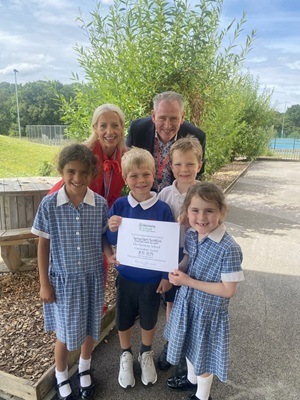 During his visit, Richard presented the Harmony Accreditation certificate to staff and pupils and visited classrooms to see the breadth of work taking place across the school. Pupils shared their books, explained their thinking and showcased projects demonstrating how the Harmony Principles are incorporated into their learning.
Richard described the pupils’ work as being “alive” and full of vitality, adding that King’s is a pioneering school that could act as a role model and partner for others interested in a similar journey.
He also praised the confidence, enthusiasm and understanding shown by pupils, saying: “You can see the joy in the learning.”
Mrs Cookson, Principal of King’s Infant & Junior Division, said: “Embracing the Harmony Principles has extended beyond the classrooms at King’s. It has involved the wider school community, including the Estates team, IT department and catering partners, Holroyd Howe, who have supported pupils’ understanding of sustainability through sharing information such as food waste data and energy generated by the school’s solar panels.
“These authentic experiences have helped make learning particularly relevant and meaningful.”


